Muay Thai is more than a sport. It is part of Thailand’s history, culture and identity. At Luktupfah Muaythai and Muay Boran School in Bangkok, we believe that understanding where the art comes from is just as important as learning how to practice it.
Over the years, Muay Thai has grown from a traditional Thai martial art into an internationally recognized combat sport. Today, people from all over the world travel to Thailand to train, compete and experience Muay Thai for themselves.
With this growth, however, the way Muay Thai is taught has also changed. Many modern gyms now focus on fitness, conditioning, pad work and preparing students for competition. There is absolutely a place for this, and it has helped introduce Muay Thai to a much wider audience.
But there is another side to Muay Thai that is sometimes overlooked.
Its history. Its traditional techniques. Its language. Its customs. The knowledge passed from one generation of Kru to the next.
This is the side of Muay Thai that we are passionate about preserving at Luktupfah Muaythai and Muay Boran School in Bangkok, Thailand.
We are not simply a place to come and work out. We are a school where students can learn about the martial art in its wider context, from traditional Muay Boran and Krabi Krabong to modern Muay Thai and the cultural traditions that have shaped it.
Keeping Traditional Muay Thai Alive
Long before Muay Thai became a professional ring sport, Thailand had a rich tradition of martial arts and fighting systems. Known collectively through historical traditions as Muay Boran, these methods developed over generations and formed an important part of Thailand’s martial heritage.
Modern Muay Thai has its own technical demands and sporting rules, but understanding its traditional roots gives practitioners a much broader appreciation of the art.
At Luktupfah, we place particular importance on teaching traditional techniques and explaining their origins, rather than simply demonstrating movements for students to copy.
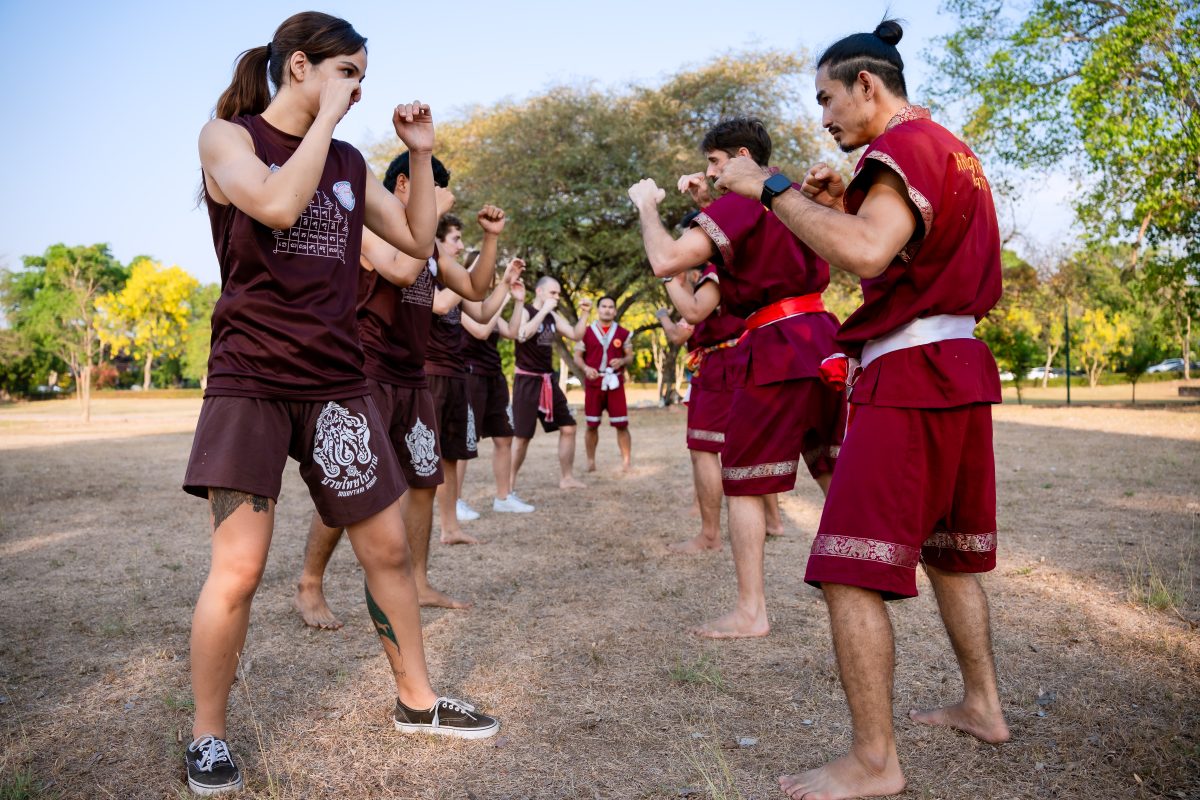
One of the traditional styles taught at the school is Pra Jao Suea (Tiger King) Muay Boran, associated with King Sanphet VIII of the Ayutthaya period, commonly known as the Tiger King.
This traditional style offers students an opportunity to study historical Muay Boran techniques and movement, exploring a different side of Thai martial arts from what is usually experienced in a modern Muay Thai gym.
For us, keeping these styles alive means continuing to teach them, understand them and pass the knowledge on. Traditional martial arts cannot be preserved through books and demonstrations alone. They need teachers and students who are willing to learn and practice them.
Krabi Krabong: Another Side of Thailand’s Martial Arts Heritage
Muay Thai is only one part of Thailand’s martial arts history.
At Luktupfah, students also have the opportunity to take special classes in Krabi Krabong (กระบี่กระบอง), Thailand’s traditional weapons-based martial art.
Krabi Krabong includes the study of traditional weapons such as swords and staffs, together with their associated movements, forms and techniques.
It is an important part of understanding how Thai martial arts developed historically, and how armed and unarmed fighting systems formed part of the country’s martial traditions.
For students who have only experienced modern Muay Thai, Krabi Krabong opens up an entirely different area of study.
These classes are not simply about learning to handle traditional weapons. They also introduce students to the history, discipline and technical knowledge behind the art.
Understanding the History, Not Just the Techniques
One thing we feel strongly about is the importance of understanding what we are teaching.
It is easy to learn a combination, practice it on the pads and move on to the next technique. But do we know where that technique comes from? Do we understand its original purpose? Do we know the traditional Thai name or the history behind it?
These are the kinds of questions that make martial arts education more meaningful.
Through our history lessons and traditional instruction, students have the opportunity to learn about the development of Muay Thai, historical fighting methods, important figures in Thai martial arts and the traditions that have been maintained over generations.
We also encourage students to become familiar with the Thai language and terminology used in training.
For international students, learning the original Thai names of techniques, commands and traditional practices adds another dimension to their experience. It helps them understand that Muay Thai is not simply a collection of movements, but an art deeply connected to the people and culture of Thailand.
The Traditions That Make Muay Thai Thai
There is a reason that traditions such as Wai Kru and Ram Muay remain an important part of Muay Thai.
The relationship between a Kru and student, the respect shown to teachers, the music, the ceremonial practices and the meaning behind the rituals are all part of what makes Muay Thai distinctive.
These traditions should not become something we perform simply because they are expected before a fight. Understanding their meaning is what gives them value.
At Luktupfah, we believe that teaching Muay Thai also means introducing students to these customs and explaining why they matter.
Respect, discipline, gratitude and the passing down of knowledge have always been important elements of traditional Thai martial arts education. They deserve to remain part of the way Muay Thai is taught.
Modern Muay Thai: Respecting the Sport While Understanding Its Roots
Of course, traditional martial arts are only part of what we teach.
Luktupfah also provides modern Muay Thai training, covering the techniques and skills used in today’s sport. From basic fundamentals and pad work to combinations, defensive techniques, sparring and ring preparation, students can develop their understanding of modern Muay Thai alongside their study of traditional martial arts.
We believe there is value in understanding both.
Modern Muay Thai continues to evolve as a competitive sport, and traditional Muay Boran provides an opportunity to study the historical techniques and principles that form part of its wider heritage.
Rather than treating them as separate worlds, we believe students benefit from understanding the relationship between the traditional art and the modern sport.
More Than Fighters: Developing Teachers, Judges and Referees
Muay Thai also depends on the people behind the scenes who teach, organise and officiate the sport.
As a school with strong connections to the wider Muay Thai community, Luktupfah also provides opportunities for those interested in developing professionally through judge and referee courses.
These courses cover the rules and regulations of Muay Thai, judging criteria, scoring, refereeing responsibilities and the standards expected of ring officials.
Whether someone wishes to become a qualified instructor, develop as a judge or referee, or simply gain a better understanding of how professional Muay Thai competitions operate, education plays an important role in the development of the sport.
We believe that maintaining standards in Muay Thai requires knowledgeable teachers and properly trained officials, as well as skilled fighters.
Experience a Different Side of Muay Thai in Bangkok
There are many places to train Muay Thai in Thailand, and each school has its own approach.
If your main objective is fitness, conditioning or preparing for competition, there are plenty of gyms offering excellent training opportunities.
But if you are interested in learning more about the history and traditional techniques of Thai martial arts, Luktupfah offers something different.
Here, you can study modern Muay Thai while also exploring:
- Pra Jao Suea (Tiger King) Muay Boran: Traditional Thai unarmed martial arts techniques.
- Krabi Krabong: Special classes in Thailand’s traditional weapons-based martial art.
- Thai Martial Arts History: Lessons exploring the origins, development and historical figures of Thai martial arts.
- Thai Language and Terminology: Understanding the original names, commands and cultural context of the art.
- Wai Kru and Ram Muay: Learning about the traditions and customs associated with Muay Thai.
- Judge and Referee Courses: Developing knowledge and professional skills in Muay Thai officiating.
- Modern Muay Thai: Training in the techniques and skills used in contemporary Muay Thai.
Whether you are visiting Bangkok, living in Thailand, an experienced martial artist or someone discovering Muay Thai for the first time, we welcome those who want to learn more about the art and its origins.
Our Responsibility to the Next Generation
Muay Thai has become a global sport, and we are proud to see it practised in so many countries.
But as it continues to grow, we must also remember the responsibility we have to preserve the knowledge and traditions that came before us.
There is so much more to Muay Thai than what happens inside the ring. Its history, traditional styles, language, ceremonies and teaching methods are all part of its identity.
At Luktupfah, we want students to leave with more than improved fitness or better fighting techniques. We want them to have a genuine understanding of what they have been learning and an appreciation for the culture from which it came.
That is what we believe makes the difference between simply practising Muay Thai and truly understanding it.
If you are looking to experience traditional Muay Thai and Muay Boran in Bangkok, we invite you to come and learn with us.
Luktupfah Muaythai and Muay Boran School
Bangkok, Thailand
Keeping the traditions alive, one generation at a time.